Free Claim Enquiry
Cauda Equine Injury
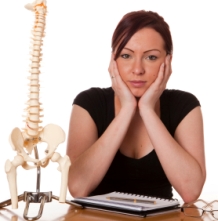 The cauda equine is a bundle of nerves at the base of the spine. If the cauda equine suffer an injury, the nerves will not function properly, resulting in neurological symptoms.
If the cauda equine injury is not dealt with quickly enough, these neurological symptoms could be permanent.
How are the cauda equine nerves injured?
The cauda equine can be injured in a number of ways. One of the most frequent causes is a slipped disc.
A slipped disc is when the inner part of a vertebral disc pokes through a weakness in the outer wall. This can press upon the surrounding structures. If a slipped disc occurs in the lower back (in the L4/L5/S1 region) the protruding material can press upon the nerves.
A slipped disc is not the only way in which the cauda equine can become injured. Other causes include:
- Spinal tumours or other lesions such an abscesses
- Inflammatory conditions such as ankylosing spondylitis
- Spinal stenosis or other conditions that cause the narrowing of the spinal canal
- Infection
- Traumatic accidents such as road traffic accidents
- Surgery or other medical procedures such as an epidural
- Spinal haematoma
What does a cauda equine injury do?
The cauda equine nerves are very delicate, so any sort of compression will quickly cause them to suffer an injury. Whenever nerves are injured, it will mean that they do not function properly.
Different nerves in the body enable different functions. The cauda equine nerves provide feeling and movement in the legs, saddle area (buttocks, perineum and genitals) and the pelvic organs (bladder, bowel and rectum).
When the nerves are injured, function in these areas will be reduced or lost altogether. This will lead to very obvious symptoms for the patient who will notice the onset of problems such as:
- Bladder dysfunction, with poor flow, reduced urethral sensation, retention of urine, need to strain and incontinence
- Saddle anaesthesia, with numbness in the buttocks, perineum, genitals and upper leg
- Weakness and poor reflexes in the lower limbs, which can also include foot drop
- Bowel dysfunction, with incontinence and/or constipation
- Pain in the back which may also extend into the legs
How should a cauda equine injury be treated?
A cauda equine injury must be treated with surgery. The aim of the operation is to decompress the nerves, removing whatever is pressing upon the cauda equine. The operation must be carried out immediately, or the nerves will suffer so much damage that the nerves will not be able to heal.
If clinicians do not treat a cauda equine injury in time because of medical errors, there will be a case of medical negligence.
Making A Cauda Equine Enquiry?
Please call us free on 0800 234 3300, from a mobile click to call 01275 334030 or complete our Free Online Enquiry for a no cost, no obligation opinion.
Share Article With:






Call us free on
0800 234 3300
or enter your details below and we will be pleased to answer your questions and advise you of your options.
What Clients Say
I would like to take the opportunity to thank you for taking on J’s case, for the comprehensive advice and also for keeping us regularly updated with regard to the progress. I would not hesitate to recommend you or the firm to anyone in the future.
Mr B
Julie and everyone at Glynns is amazing, they have been more like friends than solicitors and have helped me no end throughout my ordeal. I have had lots of medical advice from specialists which I am eternally grateful for which was all thanks to Glynns. I have to say I will actually miss my contact with Glynns when my case is over and would not hesitate to recommend them to other people who have been through a similar thing to me.
Ms M
Absolutely amazing, always available to talk, always kept informed every step of the way. Very supportive, efficient and knowledgeable. Thank you.
Ms S
Highly recommend Glynns Solicitors. Very sensitive on personal injuries. Explained everything.
Ms B
The service I have received from Chris has been absolutely outstanding. He has made a traumatic and painful situation more bearable through his constant support, advice and friendliness. Thank you
Ms A
Lucy, thank you so much for everything over the last five and a half years, I really appreciate everything you, John, Carolynne and Abdul have done to support me and make this as painless as possible and to help me secure a fair settlement.
Mrs M
A wonderful, helpful service. Great advice and lots of patience, I definitely made the right decision.
Ms D
I would like to take the opportunity to thank you for taking on J’s case, for the comprehensive advice and also for keeping us regularly updated with regard to the progress. I would not hesitate to recommend you or the firm to anyone in the future.
Mr B
Absolutely amazing, always available to talk, always kept informed every step of the way. Very supportive, efficient and knowledgeable. Thank you.
Ms S
Why Choose Us?
Over 1,000 Cauda Equina Claim enquiries handled to date
All initial enquiries are completely free of charge and without obligation
Specialists in Cauda Equina Claims
We have a range of funding options for you
Part of Glynns Solicitors - specialist medical negligence claims solicitors serving England & Wales
Free Cauda Equina Guide
Our Expertise
England & Wales
We have specialist Cauda Equina Claim Solicitors ready and waiting to help you now, wherever you are located in England or Wales.